


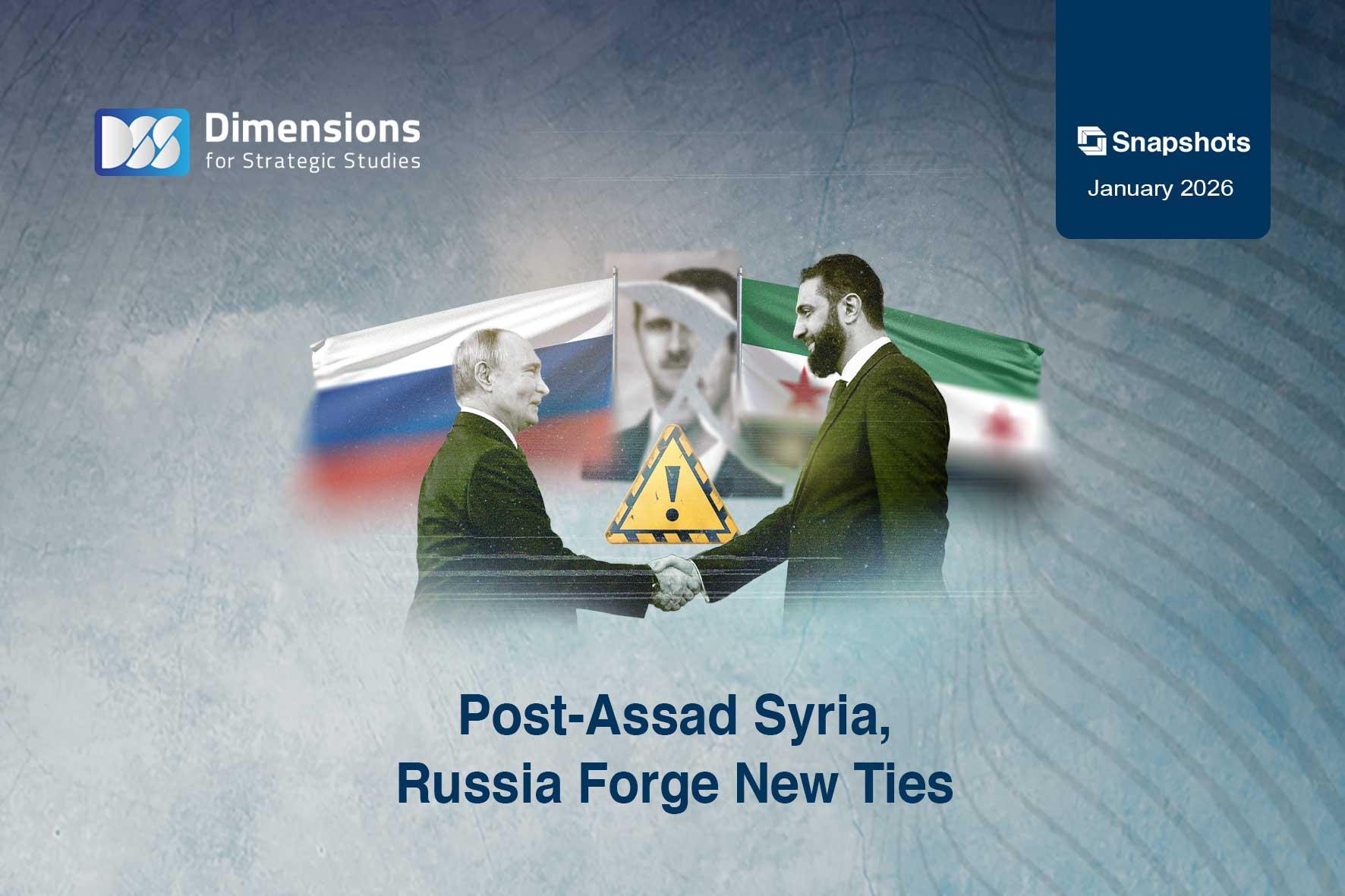
Post-Assad Syria, Russia Forge New Ties
2026-01-29699 view
The Syrian government has held a flurry of meetings with political, security, and military officials from Russia since toppling Bashar al-Assad in late 2024. They include two visits by President Ahmed al-Sharaa to Moscow, Assad’s biggest backer, in less than a year.
Such frequent, high-level meetings between the two governments indicate a desire to go beyond simply smoothing out past differences. Rather, they reflect a genuine drive to work together in ways that serve the interests of both parties.
Al-Sharaa’s most recent visit to Moscow, on January 28, came after the Syrian army had regained control of most of the country, including the majority of its oil and gas fields in the hitherto Kurdish-controlled northeast. Syria now needs partners to develop its dilapidated energy infrastructure after nearly a decade and a half of neglect, including 10 years under the control of the Syrian Democratic Forces (SDF), who extracted oil using primitive methods that severely damaged the fields and reduced their production capacity.
Syria is also seeking potential arms suppliers in light of the threats it faces, particularly from Israel, which regularly violates Syria’s territory and airspace. Russia has helped arm the Syrian army for decades—since the Soviet era—and appears to be signaling its willingness to continue this relationship, potentially shifting the focus of its military bases to training missions for the Syrian army.
Russia also wants to demonstrate that it has not lost its influence on the international stage, despite its four-year war on Ukraine and its NATO backers. Maintaining good relations with Syria could allow it to take part in to energy projects and gas pipelines to Europe via the Mediterranean in the future, even indirectly.
On the other hand, it is important for Russia to maintain its naval base on the Syrian Mediterranean coast, given the latter’s crucial role in providing logistical support to the Russian Black Sea Fleet and its forces on the Crimean Peninsula.
Damascus and Moscow appear to have found opportunities to reshape their relations beyond the Assad era, especially since Syria is working to pursue a balanced foreign policy. This also presents an opportunity for Russia, in turn, to maintain its influence in the Mediterranean basin.