


Understanding the U.S.-Iranian Ceasefire Deal
2026-04-082542 view
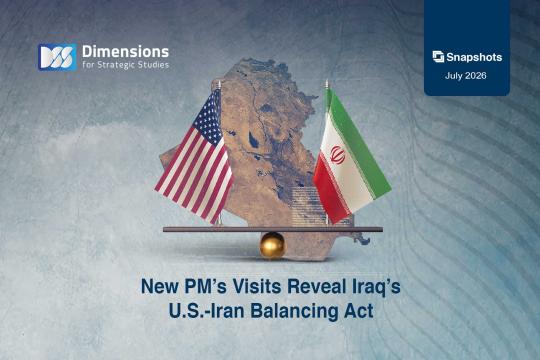
The April ceasefire deal between Iran and the U.S. is the result of intensive mediation involving regional and international powers, driven by a growing awareness of the grave dangers of further escalation and the risk that the war could spiral out of control, both in its nature and its geographical scope.
The truce agreement is the product of a collective attempt to rein in the pace of the crisis and prevent it from becoming ever more complex. However, it does not necessarily address the deep structural roots of the conflict.
The agreement is less a final settlement than a tactical repositioning by the main belligerents. The U.S., in keeping with the bombastic political discourse of President Donald Trump and those around him, will seek to present itself as the victor, claiming it has made tangible strategic gains by weakening the Iranian regime at its core. It can argue that it has killed Supreme Leader Ali Khamenei and key commanders, undermined the influence of the Islamic Revolutionary Guard Corps (IRGC), and curbed Tehran’s regional reach—especially Hezbollah in Lebanon.
Conversely, Iran will strive to promote a narrative built on its claim to “strategic resilience”—that it has absorbed intense American and Israeli pressure without collapsing. It will attempt to impose a situation under which it can negotiate without being forced to make fundamental concessions that affect the core of its political project or undermine its regional influence.
This divergence in narratives reflects the nature of contemporary conflicts elsewhere, in which military confrontation is intertwined with warfare at the levels of psychology and the media, as control of the narrative becomes a crucial element in defining “victory.”
Yet these claims of victory aside, a sober assessment suggests that the conflict is far from over. Rather, it has entered a new phase, in which direct confrontation is replaced by indirect pressure tactics. From the U.S.-Israeli side, these include economic sanctions, strategies of long-term attrition, and multi-layered political pressure, all aimed at pushing the Iranian regime toward domestic transformations that could affect its economic and social structure and undermine its cohesion in the medium and long term.
In this context, the U.S. may well use the Iranian nuclear issue as a multi-dimensional strategic tool for applying pressure—not only for deterrence or containment, but also as the basis for building a political narrative that justifies further escalation in the future.
This scenario recalls historical precedents, most notably the lead-up to the 2003 invasion of Iraq, in which allegations that Saddam Hussein’s regime possessed weapons of mass destruction—including chemical weapons—were used to justify the intervention and push for regime change.
We may see a similar pattern of discourse used against the Islamic Republic, focusing on the Iranian nuclear threat as posing a risk not only to the region but also to international security. This would help create a political and legal environment conducive to any potential escalation, even though such a scenario remains contingent on a number of international and regional factors.
Within this context, the Iranian public remains the weakest link in this equation, as it faces dual pressures: domestic repression related to the nature of the political system, and foreign pressures resulting from sanctions and embargoes. This will exacerbate the challenges facing normal Iranians and limits their opportunities for stability and development.
For their part, the Gulf Arab states are in a highly sensitive position. Although they are not direct parties to all aspects of the conflict, they have been—and continue to be—among the most affected by it, whether through security threats or political pressures. Recent experience has shown that Iran has no qualms about directly targeting these countries as part of its strategic messaging around the confrontation with Washington, placing the GCC states in a position of constant vulnerability to the conflict and its fluctuations.
Accordingly, the region appears to be heading into a phase of fragile stability, in which direct military escalation subsides without addressing the root causes of the crisis. For the Gulf states, this necessitates a more cohesive and coordinated approach, based on strengthening their systems of collective security, bolstering the domestic front, and building flexible regional balances in coordination with their Arab and Islamic neighbors, in order to contain any sudden shifts in the strategic environment.
Ultimately, even if the current truce lasts, it will not mark the end of the conflict. Rather, it represents another phase in a long process of open strategic competition, a rivalry that is likely to continue in various forms and through multiple tools, leaving the region susceptible to being reshaped according to shifting balances. This will require regional actors to maintain high levels of adaptation and preparedness, in an environment characterized by constant uncertainty and volatility.